
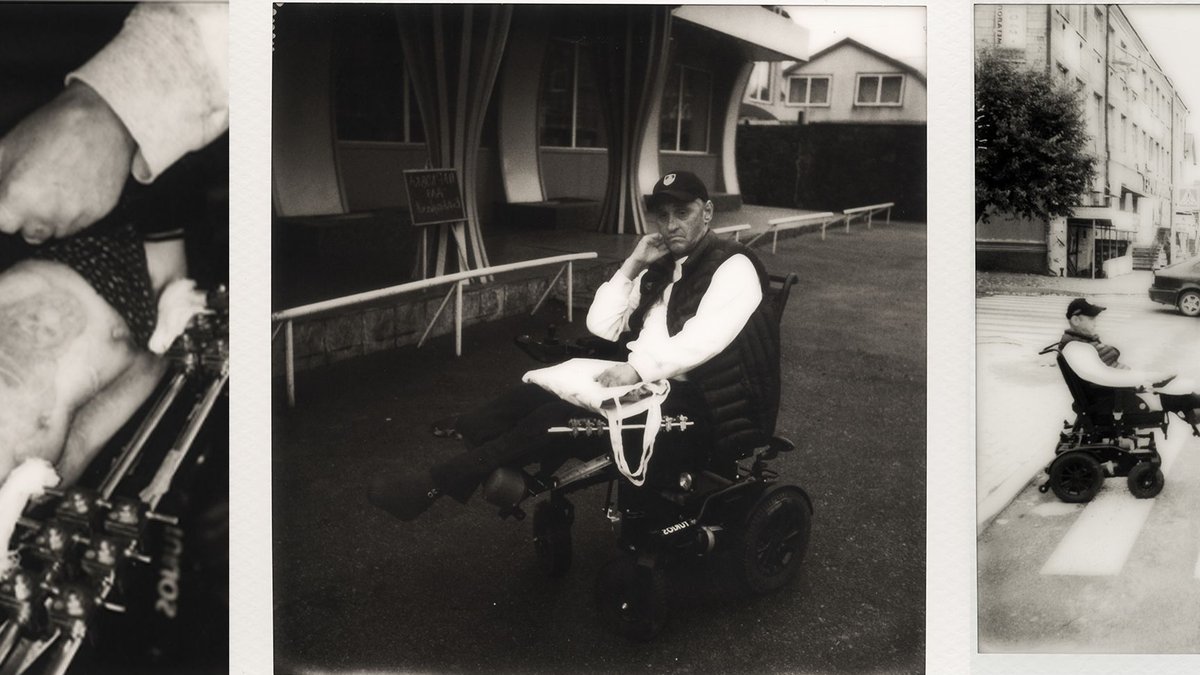
In Ukraine, a 52-year-old soldier named Sjava handles life in an electric wheelchair, his body marked by the war’s toll. He lost most of his hands and part of his legs during a mission on the front lines. On October 18, 2026, he sits in Vinnytsia Oblast, smoking a cigarette, wearing a cap bearing his unit’s insignia, and using what remains of his hands to reach for his phone.
Sjava is one of the 12,000 prisoners who joined the Ukrainian Armed Forces under a 2024 law offering conditional release in exchange for military service.
A dangerous bargain
Sjava’s journey began in the early 1990s when he first went to prison at 16. Over the next 35 years, he spent 22 behind bars, serving sentences for crimes ranging from minor offenses to murder. The collapse of the Soviet Union left Ukraine grappling with poverty and lawlessness, shaping his early years.
Read Also: Trump Predicts Ukraine’s Borders May Shift in Peace Deal
At 51, he saw a way out. He joined the 59th Shkval Battalion, a unit open to convicts, seeking not just freedom but also dignity and purpose. “Everyone at home knows me as a bandit,” he said, hoping to change that perception. His group consisted of 36 people, though only five or six survived, including him.
The reality of this bargain is harsh. Convicts often serve as infantry in the most dangerous areas, with no guarantee of survival. Sjava understood the risk, stating, “Everyone understands; it’s not going to be a little stroll in a forest.”
A mission gone wrong
On February 2, Sjava’s first assault mission took a devastating turn. Tasked with rotating soldiers, he believes his commander sent him on a “one-way trip” as punishment for refusing to contribute money for communal expenses, a common demand due to scarce resources on the front line.
The mission ended in friendly fire. Sjava recalls, “I saw an explosion. Then I look down, and I see I have a bone sticking out of my thigh.” He spent three days in the freezing cold, dragging himself across the ground, before Ukrainian soldiers found him. He took shelter beneath bodies to avoid Russian drones and prayed for survival.
Read Also: Police search deepens Kyiv tensions over winter prep
Sjava’s injuries led to 23 surgeries on his leg, held together by metal rods. Despite the state’s support, including an electric wheelchair and rehabilitation, his recovery is slow. He receives Hr 120,000 ($2,600) monthly for treatment, but his focus remains on walking again and visiting France with his friend Francouz.
Sjava’s recovery is a slow and challenging process. A deep scar marks his thigh, alongside a reaper tattoo from his twenties.
A bond forged in war
Sjava’s friendship with Francouz, whom he met during basic training, has been a source of strength. Francouz remains on active duty and cannot leave Ukraine. Sjava and Francouz made a plan to visit France together, a dream Sjava holds onto as he waits to walk again. With his characteristic dark humor, Sjava jokes about smuggling Francouz out of Ukraine: “I’ll cut him into pieces and throw him in a suitcase,” he says, laughing warmly.


Leave a Reply