
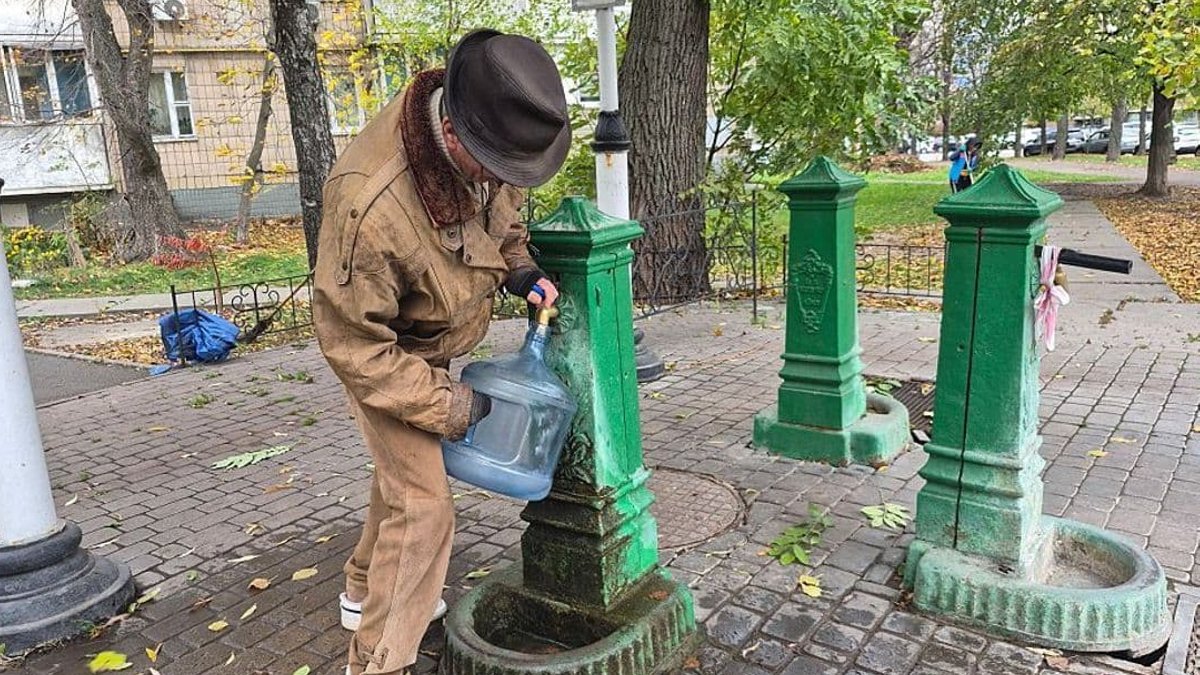
Ukraine is facing a severe water outage in Kyiv, the capital city, after a mass Russian assault on the country’s energy system. The attack, which occurred on November 3, has left residents without water for over 24 hours, with outages reported in most districts of the city.
The situation is expected to worsen in the winter, according to Mykhailo Yatsuk, director of the Institute of Water Problems and Land Reclamation. Yatsuk said that this is the most serious water outage in Kyiv since the war began.
Kyiv’s Water Outage
Russia’s mass attack on November 3 was the largest on Ukraine’s energy infrastructure this year, causing widespread power outages in the capital. Without electricity to power Kyiv’s huge, centralized water system, water is unable to be pumped to households and businesses.
Oleksandr Kharchenko, director of the Energy Industry Research Center, said that the situation has worsened over the past year largely because Russian strikes in January crippled power generation at three of Kyiv’s combined heat and power plants. Kharchenko noted that Kyiv has lost the option to power water supply from one of the CHPs.
According to Kyivvodakanal, the capital’s city-run water company, the Russian attack effectively cut off all water supply in the city on November 3. By the afternoon of November 4, the company’s workers had managed to stabilize the water system, although it still took several hours to fill the water supply networks and for water to begin flowing to consumers again.
Impact on Residents
Residents throughout Kyiv were left without water, with some restaurants even having to close their bathrooms to customers. Both Yatsuk and a manager at a water pump company said that residents should stockpile water supplies ahead of winter, when the energy grid will be overloaded, resulting in even more severe power outages.
The manager, who spoke on the condition of anonymity, said that previously, they didn’t think they needed water reserves, but now they do. The situation is getting worse after every attack, the manager added.
Related Post: US Announces Russia-Ukraine Peace Talks in Abu Dhabi
As the situation in Kyiv continues to unfold, Ukrainian officials are working to address the water outage and prevent future disruptions. Meanwhile, the city’s residents are bracing for a potentially difficult winter ahead, with concerns about access to basic necessities like water and electricity.
Mykhailo Yatsuk emphasized that the current situation is a clear indication that the water supply system in Kyiv is vulnerable to attacks on the energy infrastructure. As a result, residents are advised to take precautions and prepare for potential future outages.
President Zelensky has called a Russian airstrike on the village of Komyshuvakha in Zaporizhzhia Oblast “exceptionally horrific” and said that it is proof Russia does not want to de-escalate the situation. The death toll from the airstrike has risen to 40, with search-and-rescue operations continuing for a third day.
Zelensky also spoke to US Special Envoys Steve Witkoff and Jared Kushner ahead of trilateral peace talks, scheduled for November 10 in Abu Dhabi.
According to Ukraine’s military intelligence agency, Russia has the capacity to produce over 200 ballistic and cruise missiles per month, with up to 110 being ballistic missiles. This information comes as Russia ramps up its missile attacks across Ukraine, targeting critical infrastructure and energy facilities in deadly strikes.
The agency believes that Russia has up to 700 ballistic missiles and several thousand cruise missiles of various types in its stockpile as of October. About 115 of these weapons are believed to be 9M723 Iskander-M ballistic missiles, while the stockpile of 3M22 Zircon missiles likely exceeds 120.
Russia’s stockpile of ballistic missiles is estimated to be around 700, with 115 of them being 9M723 Iskander-M ballistic missiles.


Leave a Reply