
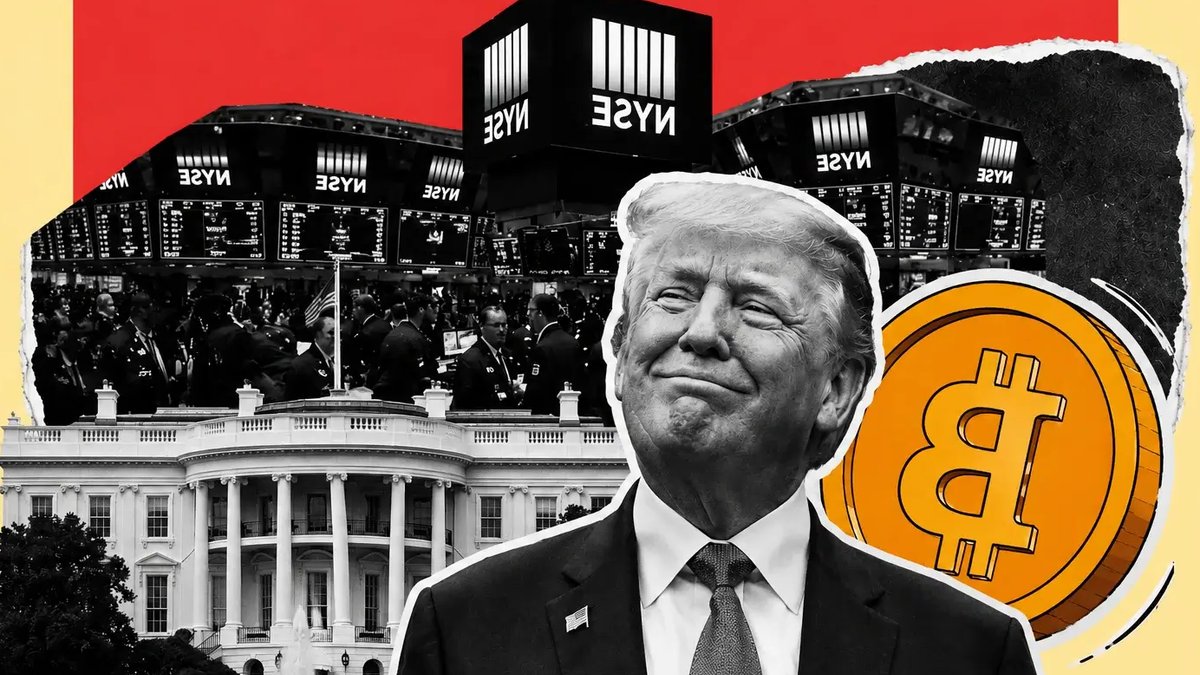
Bitcoin hit $79,241 on Friday before easing to $77,116.37, extending its best weekly performance since 2023 and marking a 24% gain since Monday. The move came as roughly $3 billion in short positions were liquidated over a 24-hour period.
The session opened at $73,009, putting the day’s range at more than $6,000 — a violent shift for an asset that spent six weeks trading within a few hundred dollars. Bitcoin started the week at $62,800. It has added more than $14,000 in four sessions, with market capitalization pushing back above $1.56 trillion.
The Treasury Buyback That Lit the Fuse
The catalyst was not a crypto headline. On Wednesday, the US Treasury announced it would at least double the maximum size of its liquidity-support buyback operations, lifting them from $2 billion to at least $4 billion per operation, targeting securities with maturities from 10 to 30 years. The 30-year yield fell as much as nine basis points to 5.19% on the headline.
Scott Bessent went further on Thursday, saying operations could exceed the announced $4 billion and that the point was to signal yields do not reflect underlying fundamentals. The equity market gave that relief back within a day — the 30-year rounded back to 5.26% and the Dow shed 703.84 points on Thursday. Bitcoin did the opposite. It kept going.
The interpretation driving the move is that a Treasury doubling repurchases of its own long-dated paper while the annual deficit runs $2.1 trillion reads to a large slice of the market as debt monetization wearing a liquidity-management costume. Bitcoin is not trading as a technology asset this week. It is trading in the same bucket as bullion, and it is outperforming.
What separates this from earlier bounces in 2026 is that the spot bid and the flow data lined up with the squeeze for the first time since spring. That combination is what the next two weeks will test.
Related: Natural gas prices edge up from yearly low
$3 Billion in Shorts Wiped
Short liquidations reached approximately $3 billion over twenty-four hours against $263.5 million on the long side.
Six weeks of compressed volatility built the fuel. Bitcoin had been boxed between roughly $62,000 and $66,900 since July 8, with 30-day realized volatility compressed to 27.2% against a long-run average near 80%. Positioning got heavily one-sided short, and every approach to the ceiling attracted more sellers.
The break cleared $66,900, then $69,000, then $70,000, then $72,000, then $75,000 — four psychological levels in three sessions. The inverse head-and-shoulders pattern that had been building through August delivered its measured target on the way up.
The uncomfortable part is what forced buying implies. Liquidation-driven rallies deliver enormous price movement without a single dollar of durable demand behind it. The short who gets stopped out is a one-time buyer, not a holder. Once the liquidation cascade exhausts itself, the marginal bid has to come from somewhere else. That is the entire question sitting under this week’s tape. The squeeze delivered $14,000. It cannot deliver another $14,000 because the positioning that funded it is gone.
Open Interest Says This Was Covering, Not Fresh Leverage
The derivatives data cuts against the frothy read. Dollar-denominated open interest rose 11.7% to $25 billion as bitcoin rallied. Measured in bitcoin terms, open interest fell 8.7% — from 366,000 BTC down to 334,000 BTC. Those two numbers moving in opposite directions tell you exactly what happened: the dollar value of the book rose because the price of the underlying rose, not because new contracts were opened. Positions were closed, not added.
That is a materially healthier structure than a rally where both dollar and coin-denominated open interest expand together. The latter is the setup that produces cascading long liquidations on the first meaningful pullback. This one removed leverage from the system rather than adding it.
Options positioning has been anchored above spot for months. The $80,000 call has been the most heavily populated strike on Deribit since spring, with open interest running above $1.6 billion at that level. Max pain readings across Deribit, Binance and OKX clustered near $69,000 to $75,000 for September and December expiries — which means spot at $77,116.37 now sits above the level where the largest notional value of contracts expires worthless.
Related: Generali history is social capital
IBIT Took $502.99 Million in a Single Session
US spot bitcoin ETFs pulled in $606.29 million in net inflows on August 20. BlackRock’s IBIT captured $502.99 million of that — more than 80% of the day’s total on its own. Fidelity’s FBTC took $64.74 million. Bitwise’s BITB added $26.4 million, ARK’s ARKB $12.2 million and Invesco’s BTCO $3.6 million. VanEck’s HODL was the lone red print at $3.6 million of outflows.
Total value traded across the bitcoin ETF complex hit $5.41 billion on August 20, and total net assets across the category reached $90.16 billion. Cumulative net inflows since launch stand at $53.40 billion. The prior session set it up — on August 19, spot bitcoin ETFs took $517.19 million, the largest daily figure since May 4.
The four-day sequence reads $297.5 million on August 17, $186.4 million on August 18, $517.19 million on August 19 and $606.29 million on August 20. That is more than $1.6 billion across four sessions, with each day larger than the last except for one dip. Ether products moved in lockstep, with spot ETH funds booking $189.15 million on August 19 and then adding $221 million on August 20.
Concentration is the risk buried in the strength. When one fund accounts for four out of every five dollars entering the category, the flow signal is a signal about one allocator’s book rather than broad institutional re-engagement.
Four Green Days Against a $5.4 Billion First-Half Hole
The flow number needs its context or it lies. Spot bitcoin ETFs recorded $5.4 billion in net outflows during the first half of 2026 — the first negative half-year since the products launched in early 2024. That capital leaving is a direct explanation for why bitcoin fell 33% over the same stretch and broke under $60,000 by the end of June. As recently as early August, the category was running roughly $4.5 billion in the red year-to-date.
The recovery has been stop-start. A seven-session inflow streak in July collected close to $1 billion, then snapped abruptly on July 24 with a single-day outflow of $225.18 million. Buyers returned in the first week of August, delivering $853.54 million across the week ended August 7. Then flows went negative again for the week ending August 14, with the category shedding $389.7 million.
So the pattern for eight months has been one strong week followed by redemptions. That is precisely why four consecutive days of inflows at this scale carries weight it would not otherwise have. It is the first time in 2026 that a price breakout and a flow breakout have arrived in the same window.
Related: Active managers adapt to investor demands and market shifts
Whether it holds is the entire trade. A fifth and sixth green session at $400 million or more would mark the sustained institutional bid that has been missing since spring. A single reversal day — a $200 million redemption print on the first pullback — would confirm the pattern that has defined the year and put $70,000 back in play immediately.
CLARITY Act, Regulation Crypto Assets, and a September 15 Vote
The regulatory leg arrived within twenty-four hours of the Treasury headline. President Trump hosted crypto executives at the White House on August 19, including leadership from Coinbase and Payward, and called publicly for Congress to pass a fair version of the CLARITY Act — the stalled market structure bill that would classify bitcoin and other digital assets as commodities rather than securities. A procedural vote is scheduled for September 15.
The SEC moved on August 18 with a proposed framework labeled Regulation Crypto Assets, offering tailored exemptions and a $5 million startup raise allowance, alongside an innovation exemption covering digital securities trading. That proposal remains preliminary and faces public comment.
Market structure legislation matters for a specific mechanical reason. Franklin Templeton has characterized federal market-structure rules as a potential inflection point that could eventually open bank balance-sheet liquidity to the asset class for the first time. Banks cannot warehouse an asset whose regulatory classification is contested. Resolve the classification and a category of capital that has been legally sidelined becomes available.
The sequencing into September is dense. Treasury buybacks scale up September 9. The CLARITY procedural vote lands September 15. The FOMC meets September 16, with implied hike odds having collapsed from nearly 100% in late July to one-third. Four policy events inside eight days, every one capable of moving liquidity conditions.
On-Chain: 43,300 BTC Hit Exchanges and SOPR Flipped to 1.01
The chain data carries the clearest warning in the entire dataset. Bitcoin remains 38.3% below the record $126,173 set on October 6, 2025, and well beneath the 2026 high of $94,820 from mid-January. The asset fell 33% in the first half of this year and dropped under $60,000 by the end of June. This is a violent bounce inside a down year, not a new cycle high.


Leave a Reply