
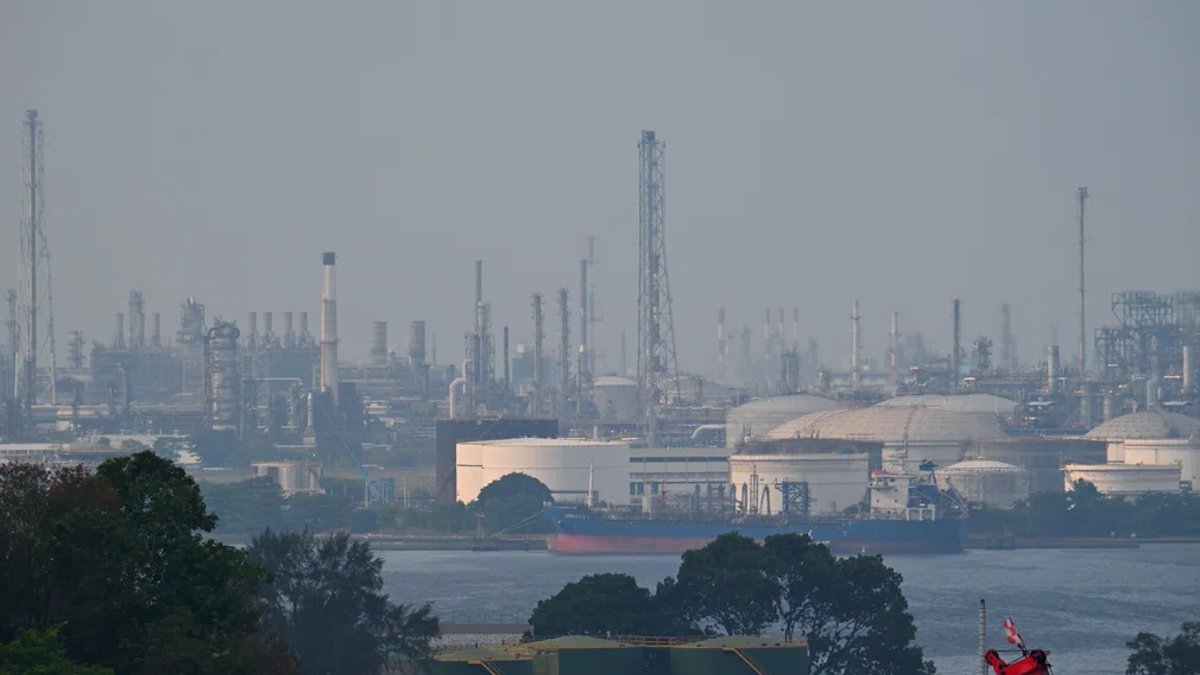
The Energy Market Authority said Indonesia’s cut to piped gas supplies will account for less than 2 percent of Singapore’s daily gas demand.
Indonesia reduces gas exports to Singapore
Indonesia’s upstream regulator chief Djoko Siswanto told local media on Oct 23 that the country will lower natural gas exports to Singapore by 31 billion British thermal units per day (BBTUD) starting Oct 24.
Based on data from Singapore’s importers, the Energy Market Authority calculated the actual reduction to be 17 BBTU per day and said it will last for 18 days.
Singapore’s total daily gas demand exceeds 1,000 BBTU, meaning the cut represents a small slice of overall consumption.
The authority added that importers will pursue all contractual recourse available for the supply disruption.
In recent months, Singapore has faced reductions ranging from 20 to 100 BBTU due to maintenance, and those gaps were filled with alternative sources without incident.
Singapore’s response and energy mix
Natural gas fuels about 95 percent of Singapore’s electricity generation, sourced from pipelines linked to Malaysia and Indonesia and from liquefied natural gas (LNG) imports worldwide.
Singapore GasCo, the central gas procurer, is prepared to increase imports as needed, according to the EMA spokesperson.
Temasek-owned Gas Supply confirmed that its deliveries have been affected by “temporary reductions” from its Indonesian supplier and that it is in direct contact with customers.
Read Also: European stocks fall on oil and unrest
Indonesia’s energy minister earlier warned that the country could halt exports to nations that do not show “mutual respect,” a stance reflected in the current cuts that target only Singapore because the Natuna and Sumatra pipelines feed the city-state directly.
Exports from the Natuna field will be reduced by 15 BBTU, while the Jambi Merang field in Sumatra will see a 16 BBTU cut.
Gas from Natuna travels through a subsea line to a receiving facility operated by Sembcorp Gas. A 2023 report showed Sembcorp signed a sales deal worth about S$1.9 billion for West Natuna gas, lasting until 2028.
Energy analysts say the reduction is unlikely to raise electricity costs significantly. The nation’s LNG infrastructure provides a safety net, allowing procurement from multiple global suppliers, though reliance on LNG can increase exposure to price volatility.
Contingency measures and supply security
EMA has activated contingency protocols that draw on existing stockpiles and alternative import routes to bridge any shortfall caused by the pipeline reduction. Power producers are mandated to keep fuel reserves, including diesel, sufficient to sustain generation during unexpected disruptions.
Geopolitical context and future outlook
Indonesia has pursued a gradual reduction in gas exports for several years, aiming to secure sufficient volumes for its growing domestic market. Earlier agreements extended deliveries to Singapore but stipulated lower quantities than previous contracts, reflecting the shift toward internal energy priorities.
Analysts observe that the timing of the cut coincides with the upcoming Singapore International Energy Week and heightened diplomatic tension over regional haze management. David Broadstock, an economist who monitors the energy sector, said the Republic called the abrupt cuts a “surprising event” for Singapore’s energy supply chain. He highlighted the timing of the cuts, which occur just before the Singapore International Energy Week starting on Oct 26, and during a period of increased complexity between the two nations over transboundary haze enforcement.
Said Broadstock: “There is a question mark over whether there is a political element tied to this action, potentially making it a reaction to the haze issue. I wouldn’t say for sure that it is a definitive driving factor, but it certainly cannot be ruled out.”


Leave a Reply