
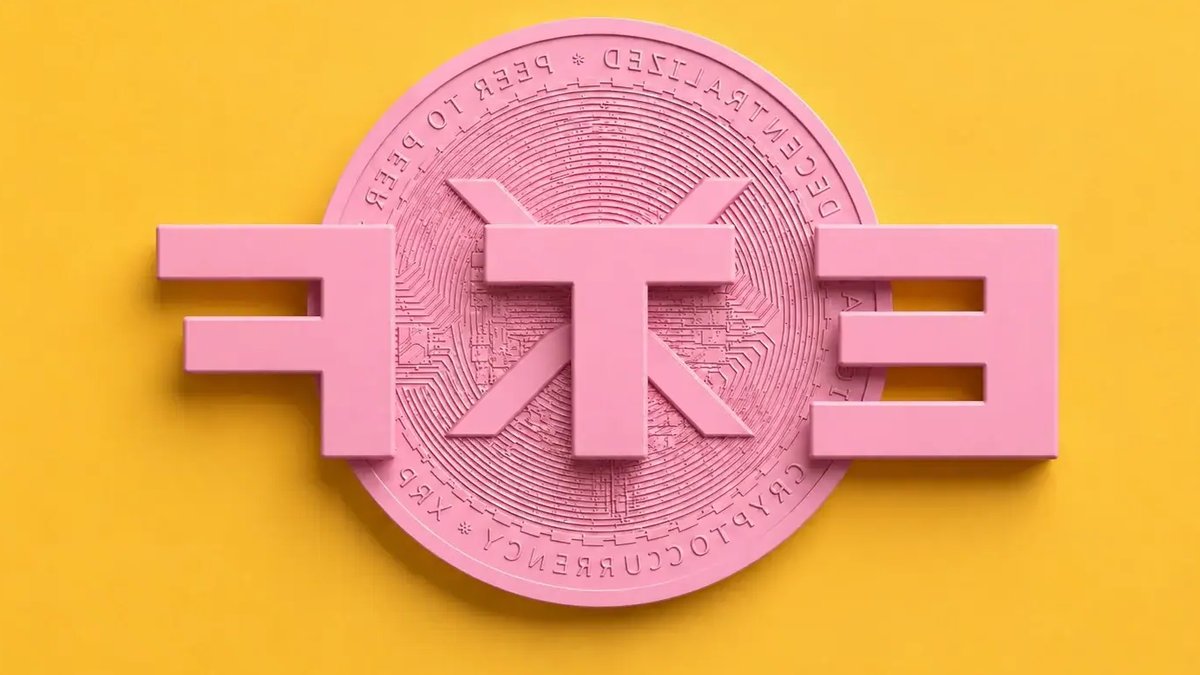
Spot XRP exchange-traded funds ended near their lowest levels of the year on July 22, despite attracting nearly $1.49 billion in cumulative net inflows. This contradiction has left share prices down about 43% for the year.
The numbers at the close
XRPI, the largest fund by assets, finished the session at $6.24, a 1.89% decline and only 11% above its 52-week low of $5.61. The drop places it 71% below its peak of $21.82. REX Osprey’s XRPR closed at $9.27, down 1.70%, roughly 12% above its own low of $8.29 and 64% off its high of $25.99.
These funds hold actual XRP in custody, so their share prices mirror the token’s performance. XRP itself has fallen roughly 71% from its high.
Inflows continue while prices drop
The sector surpassed $1 billion in assets under management earlier this year and has since drawn $1.49 billion in cumulative net inflows. Yet share prices remain close to annual lows, creating a disconnect between demand and value.
Related: Luxury does not exist says Della Valle
The process is simple: as new money enters, the funds purchase more XRP, increasing their holdings. However, the token’s value has fallen faster than the accumulation, pushing net asset value—and share prices—lower. Investors buying the ETF for exposure have been buying a falling knife, even as the fund itself gathers assets.
This pattern appears most clearly in the two main funds. XRPI’s after-hours price dipped to $6.23, while both funds have seen slight recoveries over the past month, with XRPR rising about 3% from its mid-year lows, though the gains pale against the year’s steep losses.
Seven funds, one asset
The XRP ETF market includes seven physically backed products, each holding real XRP in institutional custody. The group features crypto-focused issuers like Bitwise and 21Shares alongside traditional firms such as Franklin Templeton, which stands as the lone major traditional manager in the space.
Bitwise leads on assets, with its fund holding approximately $312.82 million. The concentration at the top means Bitwise largely drives the sector’s direction.
All seven trade on major U.S. exchanges, making XRP accessible through standard brokerage accounts. This accessibility has moved liquidity from offshore platforms to regulated markets, a shift that remains an advantage even as prices struggle.
Related: Anne Sophie Pic Leads Culinary Pulse with Innovation
Arguments for long-term potential
Supporters highlight the inflows as a sign of lasting institutional interest. While Bitcoin and Ethereum ETFs experienced outflows earlier this year, XRP funds stayed positive, reaching the $1 billion milestone. This stability partly stems from expectations around the CLARITY Act, legislation that could bring regulatory clarity to digital assets like XRP.
The physical backing also reduces available supply. The funds have locked away hundreds of millions of tokens, a scarcity effect that could eventually support prices if demand persists. So far, broader crypto weakness has prevented any noticeable impact.
The long-term case relies on the idea that inflows represent a bet on XRP’s institutional adoption. The funds are designed for durability, with multiple issuers, exchange listings, and a structure that locks away supply. Whether this leads to price recovery depends on the token’s performance and broader market conditions.
Concerns about price trends
Skeptics cite the 43% year-to-date drop as proof of ongoing pressure. AI-driven models maintain a “Sell” rating on XRPR, projecting a median decline of 17% over the next year. Some analysts warn that regulatory delays or market uncertainty could push XRP toward deeper support levels between $0.80 and $1.00.
The broader environment has not helped. Persistent inflation and a hawkish Federal Reserve have triggered risk-off moves across crypto, and XRP has underperformed the digital asset sector by more than 10 percentage points this year. The recent one-month recovery may simply be a pause rather than a true bottom.
Related: Tennis Stars Pairing With Champagne at Grand Slams
The outlook depends on whether ETF inflows can offset the token’s decline. The next quarter will likely determine if the CLARITY Act and supply constraints can close the gap or if macro pressures will push XRP lower.
Investors have learned an important distinction: inflows do not equal returns. The $1.49 billion reflects demand, but share prices reflect a token in a prolonged downturn. The sector has shown resilience in gathering assets while delivering weak performance, a contradiction shaping the current state of XRP ETFs.
July’s data showed the trend’s uneven nature. The complex recorded its largest daily intake of the month on July 16, with $6.78 million in inflows, even as XRP remained under pressure. Bitwise led the session with $4.41 million, while Franklin contributed $2.38 million, signaling continued institutional interest despite price weakness.
The daily pattern has been volatile—six sessions in July ended flat, and July 8 saw outflows of $7.29 million—but the overall trend remains positive. The funds keep accumulating assets while share prices hover near lows. This disconnect defines the XRP ETF story in 2026.


Leave a Reply