
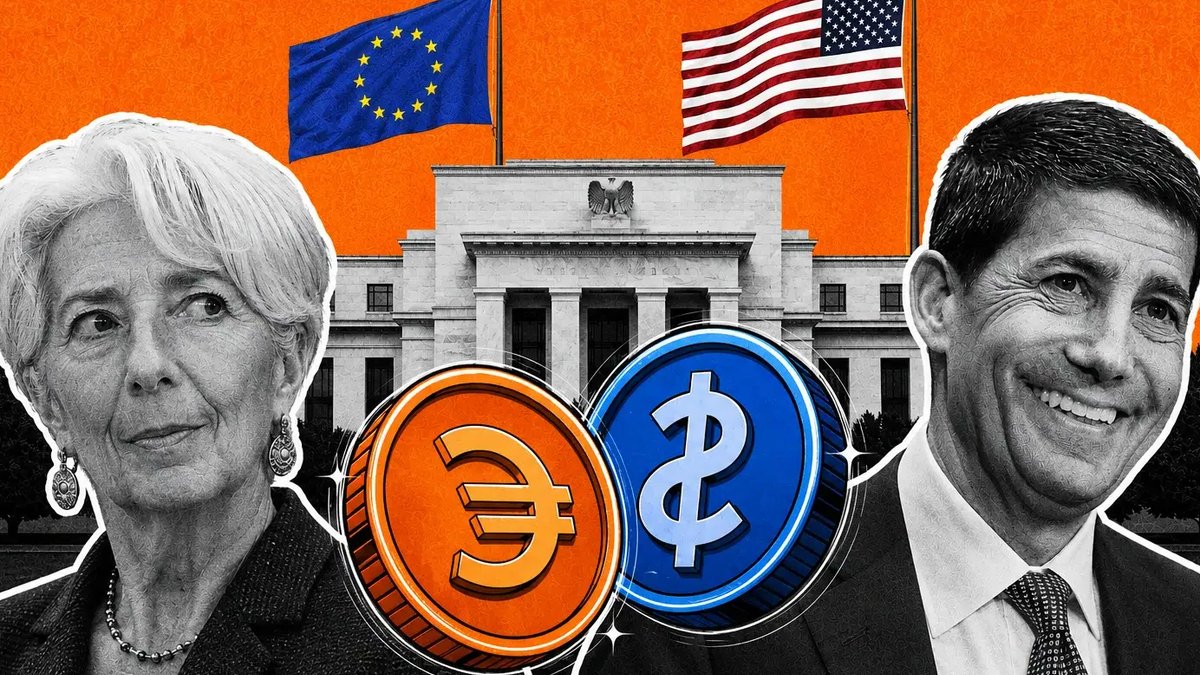
EUR/USD slipped to 1.1654 on Tuesday, staying just above the 20‑day EMA of 1.1577 after the pair rebuffed the 1.1711 level that had marked a four‑day high late last week.
Technical Hold Persists Amid Dollar Bounce
The pair fell 0.09% on the session, moving in a tight band through the European morning and failing to climb back above 1.1700 when New York opened. The rejection matters more than the modest pullback; last week the single currency rose past $1.170, its strongest since May, before turning lower.
Over the past month EUR/USD has risen 2.51%, yet it is only 0.14% higher than a year ago, essentially unchanged from the start of 2026. The dollar index, meanwhile, edged up to 99.07 after hitting a low of 98.55 on August 22 – the weakest reading since mid‑May.
A flat‑lining pound at around 1.3630 mirrored the euro’s stall, suggesting the moves are driven by positioning rather than new fundamentals. The dollar’s modest rebound lifted the index about half a percent, but the technical pattern still shows a downtrend with lower highs and lows.
Fiscal Surprise Fuels Dollar Weakness
The catalyst behind the dollar’s recent dip was a Treasury announcement on August 19 to double the size of its liquidity‑support buyback program for 10‑ to 30‑year bonds, raising the cap from $2 billion to at least $4 billion per operation. The program runs from September 9 through November 4 and will be funded from the Treasury General Account, not short‑term bill issuance.
Related: XRP Rips to $1.43 as Regulators Call It a Commodity
Dealers had taken only $2 billion of a $20 billion offer in the previous round, so the larger cap was read as a signal of intent rather than a routine adjustment. The index fell from 100.10 to 98.55 over three sessions, while the 30‑year yield hovered near a 19‑year high.
Because the single currency’s 57.6% weight in the dollar basket makes the two movements almost inverse, the euro’s rise to 1.1711 followed the index’s dip below 98.55. If the index climbs back above 99.50, the euro could test the 1.1577 EMA; a sustained break above 100.00 would call the August rally into question.
Watch 98.55 as a floor and 99.50 as a ceiling on the index – those two levels bracket the euro’s next 150 pips.
German Business Sentiment Beats Forecast
The Ifo Business Climate Index for Germany climbed to 88.8 in August, up from 86.7 in July and well above the 87.2 consensus. The Current Assessment sub‑index rose to 88.5 and the Expectations component reached 89.1, both surpassing forecasts.
Manufacturing balance improved from –9.6 to –4.2, while services moved from –4.4 to –2.1. Trade and construction also showed less pessimism. The survey, based on more than 7,000 firms, is the most‑watched leading indicator for Europe’s largest economy.
Despite the strong reading, the euro traded near 1.1660 immediately after the release, indicating that FX markets are not yet pricing euro‑area data. Instead, they remain focused on U.S. fiscal developments and the Federal Reserve’s September meeting.
Related: 123 Low stock surges in trading
In practice, traders may find the euro’s resilience limited if German optimism fades while the broader bloc still wrestles with French weakness. The divergence creates a narrow window for a data‑driven rally.
Policy Outlook and Upcoming Events
Markets price a September 10 European Central Bank hike that would lift the deposit rate to 2.50%, with probability estimates near 79%. The Fed’s policy range sits at 3.50%–3.75% according to the latest Federal Reserve policy rate reports.
Real policy rates, after accounting for headline inflation, are roughly –0.65% in the euro area and +0.25% in the United States. The positive real rate advantage for the dollar helps explain why the euro has struggled to break 1.1800 despite fiscal headwinds.
Wednesday’s PCE inflation data and Friday’s Jackson Hole keynote will test the current setup. A surprise hawkish move from the Fed could sustain the dollar’s bounce, while a dovish tone might allow the euro to regain some ground.
Overall, the euro sits on short‑term trend support while both central banks face opposite policy paths. The next few weeks will likely decide whether the single currency can clear the 1.1711 barrier before the Jackson Hole conference.


Leave a Reply